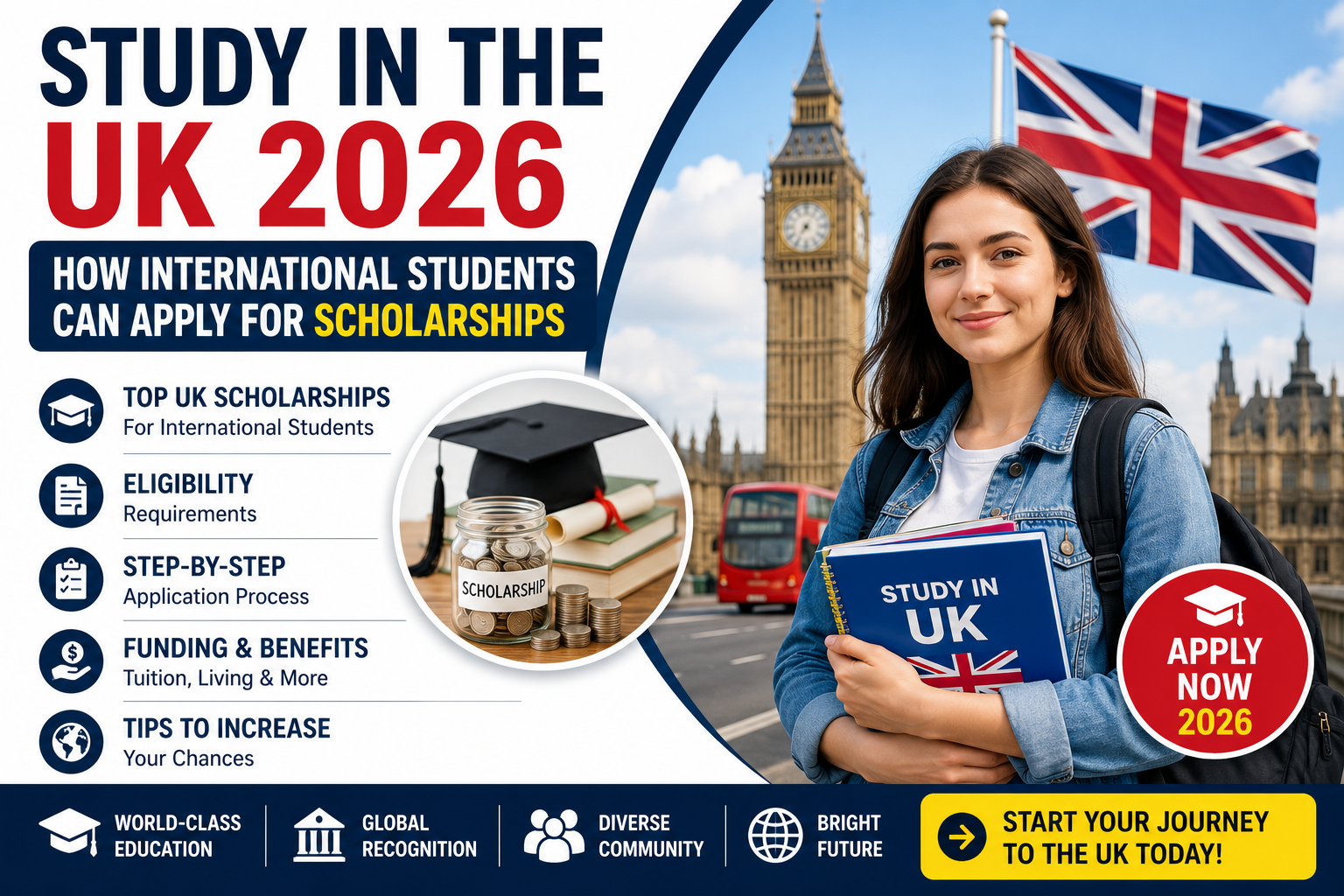
Study in the UK 2026: How International Students Can Apply for Scholarships
Introduction
Studying in the United Kingdom remains a dream for millions of students worldwide. Home to some of the world’s most respected universities, a multicultural environment, and globally recognized degrees, the UK continues to attract ambitious learners seeking quality education and international career opportunities. However, tuition fees, living expenses, travel costs, and other educational expenses can make studying abroad financially challenging for many students.
Fortunately, a wide range of scholarships are available for international students planning to study in the UK in 2026. These scholarships are offered by universities, government-funded programs, charitable organizations, and private institutions. They can significantly reduce the financial burden and, in some cases, fully cover tuition fees, accommodation, and living expenses.
This comprehensive guide explains everything international students need to know about applying for UK scholarships in 2026. You will learn about the different types of scholarships, eligibility requirements, application procedures, important deadlines, common mistakes to avoid, and expert strategies that can improve your chances of receiving funding.
Whether you are planning to pursue an undergraduate degree, postgraduate program, master’s degree, or doctoral research, this guide will help you navigate the scholarship application process with confidence.
Table of Contents
- Why Study in the UK in 2026?
- Overview of UK Scholarships for International Students
- Key Highlights of UK Scholarship Opportunities
- Types of Scholarships Available
- Eligibility Requirements
- Step-by-Step Guide to Applying for UK Scholarships
- Essential Documents Required
- Tips to Increase Your Scholarship Chances
- Common Mistakes Applicants Make
- Financial Planning Beyond Scholarships
- Frequently Asked Questions
- Internal Linking Suggestions
- Conclusion
- SEO Meta Title
- SEO Meta Description
Why Study in the UK in 2026?
The UK continues to be one of the most popular destinations for international education due to its academic excellence, research opportunities, cultural diversity, and strong global reputation. Universities in the UK consistently rank among the best in the world, offering students access to cutting-edge facilities, experienced faculty, and internationally recognized qualifications.
One of the major advantages of studying in the UK is the shorter duration of degree programs compared to many other countries. Undergraduate programs are typically completed in three years, while most master’s programs can be finished within one year. This can help students reduce overall educational costs while entering the workforce sooner.
The UK also offers excellent post-study opportunities. Graduates may benefit from work opportunities through graduate visa pathways, allowing them to gain valuable international work experience after completing their studies. Additionally, employers worldwide recognize UK degrees for their academic rigor and practical focus.
For students who have strong academic records but limited financial resources, scholarships provide a pathway to access these opportunities without carrying an overwhelming financial burden.
Overview of UK Scholarships for International Students
Scholarships are financial awards designed to support students in pursuing their educational goals. Unlike student loans, scholarships generally do not require repayment. In the UK, scholarship opportunities are available at multiple levels, including undergraduate, postgraduate, doctoral, and research programs.
Scholarships may be awarded based on:
- Academic excellence
- Leadership potential
- Community involvement
- Financial need
- Research achievements
- Specific countries or regions
- Particular fields of study
Some scholarships provide partial funding, covering only a portion of tuition fees, while others offer full funding that includes tuition, accommodation, travel expenses, and monthly living stipends.
Because competition can be intense, understanding application requirements and preparing early is crucial for success.
Key Highlights of UK Scholarship Opportunities in 2026
Wide Range of Funding Sources
International students can access scholarships funded by:
- UK universities
- Government programs
- International organizations
- Educational foundations
- Private donors
- Research councils
Opportunities Across Academic Levels
Scholarships are available for:
- Undergraduate degrees
- Master’s programs
- PhD and doctoral studies
- Research fellowships
- Specialized professional courses
Merit-Based and Need-Based Options
Many scholarships focus on academic excellence, while others prioritize students from disadvantaged backgrounds or developing countries.
Diverse Subject Coverage
Funding opportunities exist across various disciplines, including:
- Business and Management
- Engineering
- Computer Science
- Medicine
- Social Sciences
- Environmental Studies
- Law
- Arts and Humanities
Types of Scholarships Available
Government-Funded Scholarships
Government-funded scholarships are among the most prestigious funding opportunities available for international students. These programs often provide comprehensive financial support and are highly competitive.
Such scholarships typically seek candidates who demonstrate:
- Strong academic performance
- Leadership qualities
- Commitment to community development
- Potential to contribute positively to their home countries
Applicants should carefully review eligibility requirements and begin preparing applications several months before deadlines.
University Scholarships
Many UK universities offer their own scholarship programs specifically for international students. These scholarships may be awarded automatically based on academic achievement or require a separate application.
University scholarships often consider:
- Previous academic results
- Personal statements
- Leadership experience
- Extracurricular involvement
- Research potential
Some universities allocate significant scholarship budgets to attract talented international students from around the world.
Subject-Specific Scholarships
Certain scholarships target students pursuing specific fields of study. For example:
- Engineering scholarships
- STEM scholarships
- Medical scholarships
- Law scholarships
- Environmental science scholarships
These opportunities are particularly beneficial for students whose academic interests align with national or institutional priorities.
Research Scholarships
Students pursuing doctoral or research-intensive programs may qualify for research funding. These scholarships often support:
- Laboratory work
- Research projects
- Conference participation
- Academic publications
- Fieldwork expenses
Research scholarships are especially common in science, technology, healthcare, and engineering disciplines.
Need-Based Scholarships
Need-based scholarships focus primarily on financial circumstances rather than academic achievement alone.
Applicants may need to provide:
- Family income documentation
- Financial statements
- Evidence of economic hardship
- Personal financial declarations
These scholarships help ensure that talented students can access higher education regardless of financial background.
Eligibility Requirements for UK Scholarships
Although requirements vary between scholarship providers, several common criteria frequently apply.
Academic Performance
Strong academic results remain one of the most important factors in scholarship selection.
Applicants should strive to demonstrate:
- Excellent grades
- High GPA scores
- Consistent academic achievement
- Relevant coursework excellence
Academic transcripts are typically required during the application process.
English Language Proficiency
International students often need proof of English proficiency through recognized language tests.
Common requirements may include:
- IELTS scores
- TOEFL scores
- Other approved English qualifications
Meeting minimum language requirements is essential for both university admission and scholarship consideration.
Leadership and Extracurricular Activities
Many scholarship committees seek well-rounded candidates who demonstrate leadership potential.
Examples include:
- Student government participation
- Volunteer work
- Community service
- Sports leadership
- Nonprofit involvement
- Entrepreneurship initiatives
Strong extracurricular achievements can significantly strengthen an application.
Personal Statement
A compelling personal statement helps scholarship committees understand:
- Educational goals
- Career aspirations
- Personal achievements
- Motivation for studying in the UK
- Future impact plans
This document often plays a decisive role in competitive scholarship applications.
Step-by-Step Guide to Applying for UK Scholarships
Step 1: Research Scholarship Opportunities
Begin researching scholarship options at least 12 months before your intended enrollment date.
Create a spreadsheet including:
- Scholarship names
- Eligibility criteria
- Application deadlines
- Required documents
- Award values
This organized approach prevents missed opportunities.
Step 2: Shortlist Suitable Scholarships
Not every scholarship will match your profile.
Focus on opportunities that align with:
- Academic background
- Nationality
- Field of study
- Career goals
- Financial circumstances
Targeting appropriate scholarships improves efficiency and success rates.
Step 3: Apply for University Admission
Many scholarships require applicants to first receive an admission offer from a UK institution.
Prepare:
- Academic transcripts
- Application forms
- Recommendation letters
- Personal statements
- English language test results
Submitting strong university applications early can increase scholarship eligibility.
Step 4: Prepare Scholarship Documents
Most scholarship applications require supporting materials such as:
Academic Records
Official transcripts and certificates demonstrate academic qualifications.
Recommendation Letters
References from teachers, professors, employers, or supervisors provide independent validation of your abilities and character.
Personal Statement
Clearly explain:
- Why you chose the UK
- Your educational objectives
- Future career plans
- How the scholarship will help achieve your goals
Resume or CV
Highlight:
- Academic achievements
- Work experience
- Volunteer activities
- Leadership positions
- Awards and recognitions
Step 5: Submit Applications Before Deadlines
Scholarship deadlines vary significantly.
Many applicants miss opportunities simply because they apply too late.
Best practices include:
- Submitting applications early
- Reviewing all documents carefully
- Following formatting instructions
- Keeping copies of submissions
Attention to detail demonstrates professionalism and commitment.
Step 6: Prepare for Scholarship Interviews
Some scholarships include interviews as part of the selection process.
Common interview topics include:
- Academic goals
- Leadership experiences
- Career plans
- Motivation for studying in the UK
- Contributions to society
Practice answering questions confidently and clearly.
Essential Documents Required
While requirements vary, most UK scholarship applications require:
Academic Transcripts
Official educational records from previous institutions.
Degree Certificates
Proof of completed qualifications.
English Language Test Results
Evidence of language proficiency where required.
Passport Copy
Identification and nationality verification.
Personal Statement
A detailed explanation of academic and professional objectives.
Recommendation Letters
Professional or academic references.
Curriculum Vitae (CV)
Comprehensive overview of education, skills, and experience.
Financial Documents
Required for certain need-based scholarships.
Keeping digital and printed copies of these documents can streamline multiple applications.
Benefits of Winning a UK Scholarship
Scholarships offer advantages that extend far beyond financial support.
Reduced Financial Stress
Students can focus more on academics rather than worrying about tuition and living expenses.
Access to Prestigious Institutions
Scholarships open doors to highly respected universities that might otherwise be financially inaccessible.
Enhanced Career Opportunities
Scholarship recipients often gain recognition from employers due to the competitive nature of award selection.
Networking Opportunities
Many scholarship programs connect students with:
- Alumni networks
- Industry leaders
- Academic experts
- International peers
These connections can provide valuable long-term career benefits.
Personal Growth
Studying abroad develops:
- Independence
- Cross-cultural communication skills
- Global perspectives
- Adaptability
These qualities are highly valued in today’s international workforce.
Expert Tips to Increase Scholarship Success
Start Early
Successful applicants often begin preparations a year or more before enrollment.
Early planning allows time to improve grades, build extracurricular activities, and prepare strong application materials.
Tailor Every Application
Avoid using identical essays for every scholarship.
Customize applications to address specific scholarship goals and values.
Highlight Leadership Impact
Instead of listing activities, demonstrate measurable impact.
For example:
- Funds raised
- Projects completed
- Communities served
- Teams led
Quantifiable achievements are more persuasive.
Focus on Your Future Vision
Scholarship committees want to invest in students who have clear goals.
Explain:
- What you want to achieve
- Why it matters
- How the scholarship supports your journey
A strong vision creates a memorable application.
Proofread Thoroughly
Grammar mistakes and formatting errors can weaken an otherwise strong application.
Review documents multiple times and seek feedback from trusted mentors or advisors.
Common Mistakes International Students Make
Missing Deadlines
Late applications are typically not considered.
Create a calendar with reminders for every scholarship deadline.
Ignoring Eligibility Requirements
Applying for scholarships without meeting basic criteria wastes valuable time.
Always verify eligibility before applying.
Generic Personal Statements
Scholarship reviewers can easily identify copied or generic essays.
Each statement should reflect genuine experiences and goals.
Weak Recommendation Letters
Choose recommenders who know your work well and can provide specific examples of your achievements.
Incomplete Applications
Missing documents often result in automatic disqualification.
Double-check every submission before sending it.
Financial Planning Beyond Scholarships
Even with scholarship support, students should prepare a realistic financial plan.
Consider expenses such as:
- Accommodation
- Food
- Transportation
- Study materials
- Health insurance
- Personal expenses
Maintaining a budget can help avoid financial challenges during your studies.
Students should also explore:
- Part-time work opportunities
- University bursaries
- Emergency funding programs
- Research assistantships
- Departmental grants
Combining multiple funding sources can create a more sustainable financial strategy.
Frequently Asked Questions
1. Can international students get full scholarships in the UK?
Yes. Some scholarship programs provide full funding that may cover tuition fees, living expenses, travel costs, and other educational expenses. Competition is typically high, so strong applications are essential.
2. When should I start applying for UK scholarships for 2026?
Ideally, begin researching scholarships 12–18 months before your intended enrollment date. Early preparation allows time to gather documents and meet application deadlines.
3. Are scholarships available for undergraduate students?
Yes. Many universities and organizations offer scholarships specifically for undergraduate international students, although funding opportunities may be more extensive at postgraduate levels.
4. Do I need an admission offer before applying for a scholarship?
Some scholarships require an admission offer, while others allow simultaneous applications. Always review specific scholarship guidelines.
5. Can average students receive scholarships?
Yes. While academic excellence is important for many awards, some scholarships also consider leadership, community service, financial need, research potential, and personal achievements.
Internal Linking Suggestions
To improve SEO and user engagement, consider linking this article to related content such as:
- Complete Guide to UK Student Visas
- Cost of Living in the UK for International Students
- Best UK Universities for International Students
- How to Write a Winning Scholarship Personal Statement
- IELTS Preparation Guide for Study Abroad Applicants
- Post-Study Work Opportunities in the UK
- Undergraduate vs Master’s Programs in the UK
- International Student Accommodation Guide
Conclusion
The opportunity to study in the UK in 2026 can be life-changing, providing access to world-class education, international networking opportunities, and strong career prospects. While the financial cost of studying abroad can appear daunting, scholarships make higher education more accessible for talented students from around the world.